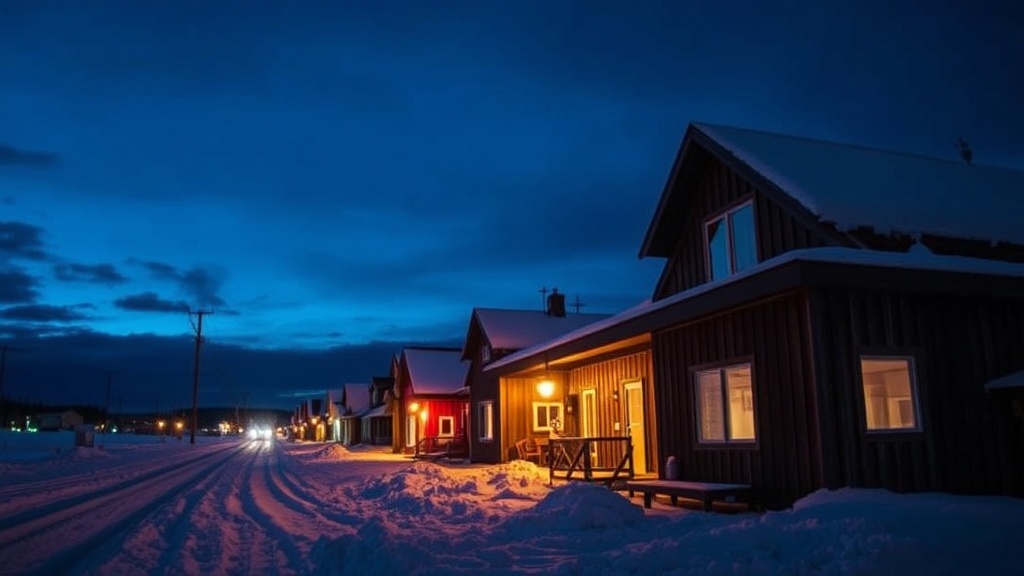
How Whitehorse Residents Adapt to the Midnight Sun and Polar Nights

What's It Like Living With 24-Hour Daylight in Whitehorse?
Did you know that on the summer solstice, Whitehorse receives over 19 hours of direct sunlight — and the remaining hours never truly get dark? From late May through mid-July, our city experiences what locals call the "Midnight Sun," a phenomenon that transforms daily life in ways visitors rarely anticipate. Streets stay busy at 11 PM. Kids play outside at midnight. Blackout curtains become the most valuable home improvement you can make. Living in the Yukon capital means adapting to light cycles that would seem extreme anywhere else in Canada — and we've developed some surprisingly practical strategies over generations.
The Midnight Sun doesn't just affect your sleep schedule (though it certainly does that). It reshapes how Whitehorse businesses operate, when our community events take place, and even how our gardens grow. Long-time residents on the escarpment above downtown will tell you about the first summer they moved here — waking up at 2 AM convinced it was morning, wandering confused into their kitchens. The light here is different. Brighter. More persistent. And your body notices.
How Do Whitehorse Gardens Thrive Under Constant Summer Sun?
One unexpected benefit of our extended daylight? Remarkable growing conditions that surprise even seasoned gardeners from southern provinces. The Yukon Agricultural Branch has documented that Whitehorse gardens can produce vegetables at rates that compete with much warmer climates — all because plants here photosynthesize for nearly 20 hours daily during peak season.
Local growers in the Hillcrest neighbourhood have turned this advantage into something of a competitive sport. Tomatoes that struggle in Vancouver's shorter summer days explode here — sometimes doubling their expected yields. Community garden plots along the Millennium Trail see residents staking tomatoes at 10 PM, harvesting lettuce before bed, and generally abandoning traditional schedules entirely. The Whitehorse Community Garden on Range Road operates on what regulars call "sun time" — open access whenever daylight permits, which during late June means effectively round-the-clock availability.
But the light comes with challenges. Plants don't rest properly when darkness never falls. Experienced Whitehorse gardeners know to shade sensitive crops during the brightest weeks — using old bedsheets, shade cloth from Raven Recycling's Re-use Area, or strategic planting near buildings. Leafy greens bolt faster here than anywhere else in Canada. The trick isn't maximizing light (we've got plenty) — it's managing the relentless intensity that beats down on our gardens from 5 AM until after 11 PM.
Practical Tips for Gardening Under the Midnight Sun
- Invest in shade cloth — 30-50% density helps tender crops handle the extended exposure
- Water deeply in the evening — evaporation happens slower during our cooler nights, even when light persists
- Choose bolt-resistant varieties — ask staff at Arctic Farmer on Industrial Road which lettuces handle our unique conditions
- Harvest before 9 AM — sugar content peaks after cooler nights, and morning-picked greens stay crisp longer
What Sleep Strategies Actually Work for Whitehorse's Endless Summer Days?
The gardening benefits are lovely — but sleep? That's where the Midnight Sun becomes less charming. Newcomers to Whitehorse often report their first sleepless summer as one of the most disorienting experiences of their lives. Your circadian rhythm — that internal clock evolution spent millions of years developing — suddenly becomes useless. When the sky at 1 AM looks identical to 1 PM, your brain short-circuits.
Long-time Whitehorse residents have developed extensive coping mechanisms, and they vary by neighbourhood. In Riverdale, where eastern exposure means early morning light floods bedrooms by 4:30 AM, you'll find the highest concentration of blackout curtain installations per capita in Canada. Local contractor Advanced Window Solutions on 2nd Avenue reports that their blackout installation bookings spike every April — residents preparing for the inevitable.
But curtains aren't enough for everyone. Some Whitehorse locals swear by sleep masks, though finding ones that block all light (including the persistent glow around the edges) takes trial and error. Others adapt their schedules entirely — embracing polyphasic sleep during peak summer, napping when tired regardless of the clock. The Yukon Health and Social Services has published guidance specifically for shift workers who face compounded challenges during these months.
The psychological impact shouldn't be underestimated. Our community sees increased anxiety reports during June and July — not from the light itself, but from the pressure to "take advantage" of it. There's an unspoken expectation in Whitehorse that you should be productive, outdoors, active during every waking hour of available sun. FOMO takes on a seasonal intensity here. Locals learn to give themselves permission to rest — even when the sun refuses to.
How Does Whitehorse's Social Calendar Shift During the Midnight Sun Season?
Our city's event schedule bends around the light. Outdoor concerts at Shipyards Park start at 8 PM — late by Toronto standards, perfectly timed here. The Atlin Arts & Music Festival (though technically just across the border) influences Whitehorse's summer rhythm — locals road-trip down, returning energized and sleep-deprived. More locally, the Kwanlin Dün Cultural Centre hosts evening programming that would seem bizarre elsewhere: drum circles at 10 PM, storytelling sessions that begin at sunset — which might mean 11:15 PM in late June.
Sports leagues adjust too. The Whitehorse Slo-Pitch League runs games until 10 PM, taking advantage of perfect visibility without the afternoon heat. Soccer matches on the fields behind F.H. Collins Secondary School stretch past children's usual bedtimes — parents adapt, packing dinners, accepting that "night" no longer means what it used to. The City of Whitehorse extends facility hours across all recreation centres, recognizing that residents want to squeeze activity into every possible daylight hour.
Restaurants adapt their rhythms. The Wheelhouse on Main Street sees dinner rushes that peak at 9 PM — unthinkable in southern cities where kitchens close earlier. Patio seating at Wood Street Brewpub stays occupied well past when other Canadian cities have turned to indoor evening dining. The social contract shifts: meeting friends at 8 PM is early. Plans that start at 10 PM are normal. Sleep schedules become negotiable.
Community Events That Embrace the Light
- Solstice celebrations — Various neighbourhoods host midnight gatherings; the Whitehorse Waterfront sees informal drum circles and potlucks that stretch until 2 AM
- Evening farmers markets — The Fireweed Community Market extends hours, running until 9 PM with full daylight
- Night photography workshops — Local photographers teach techniques for the "golden hour" that lasts for hours, not minutes
- Midnight running groups — The Whitehorse Road Runners organize evening jogs that begin at 10 PM when temperatures drop and trails empty
What About the Other Extreme? Preparing for Whitehorse's Polar Nights
If summer's endless light sounds exhausting, consider the winter balance. From early December through mid-January, Whitehorse sees fewer than 7 hours of daylight — and that light is thin, distant, arriving after most workdays begin and departing before they end. The psychological adjustment from July to December is profound. Many residents report that winter's darkness actually feels easier — at least your body understands when to sleep.
The transition between these extremes happens fast here. August brings noticeably earlier sunsets. By September, we're back to "normal" Canadian darkness patterns. The rapid shift catches newcomers off guard — one week you're gardening at midnight, six weeks later you're commuting home in twilight at 5 PM. Canadian Tire on 4th Avenue stocks SAD lamps prominently by September, knowing the demand spike is predictable.
Whitehorse has developed infrastructure around these rhythms. The Canada Games Centre becomes a crucial community hub during winter darkness — bright, warm, full of artificial light and activity. Light therapy rentals spike at Whitehorse Health Centre locations. The city maintains extensive trail lighting along the Yukon River waterfront, ensuring that even during our darkest months, residents can move safely through outdoor spaces.
There's something quietly profound about adapting to these cycles. You're reminded, living in Whitehorse, that human systems — 9-to-5 workdays, standardized school schedules, fixed mealtimes — are arbitrary constructions. The natural world here operates on different rhythms. We adjust, improvise, invest in blackout curtains and SAD lamps. We garden at midnight and nap at noon. We learn that "normal" is a flexible concept, negotiated between human habit and Arctic reality. And somehow, despite the extremes — or perhaps because of them — this city builds a community that understands adaptation as a fundamental skill.